Article 07 | Beyond the Badge: How F1 Drivers Are Building Motorsport Ecosystems
Lando Norris has launched a junior racing team. That isn't the most interesting part.
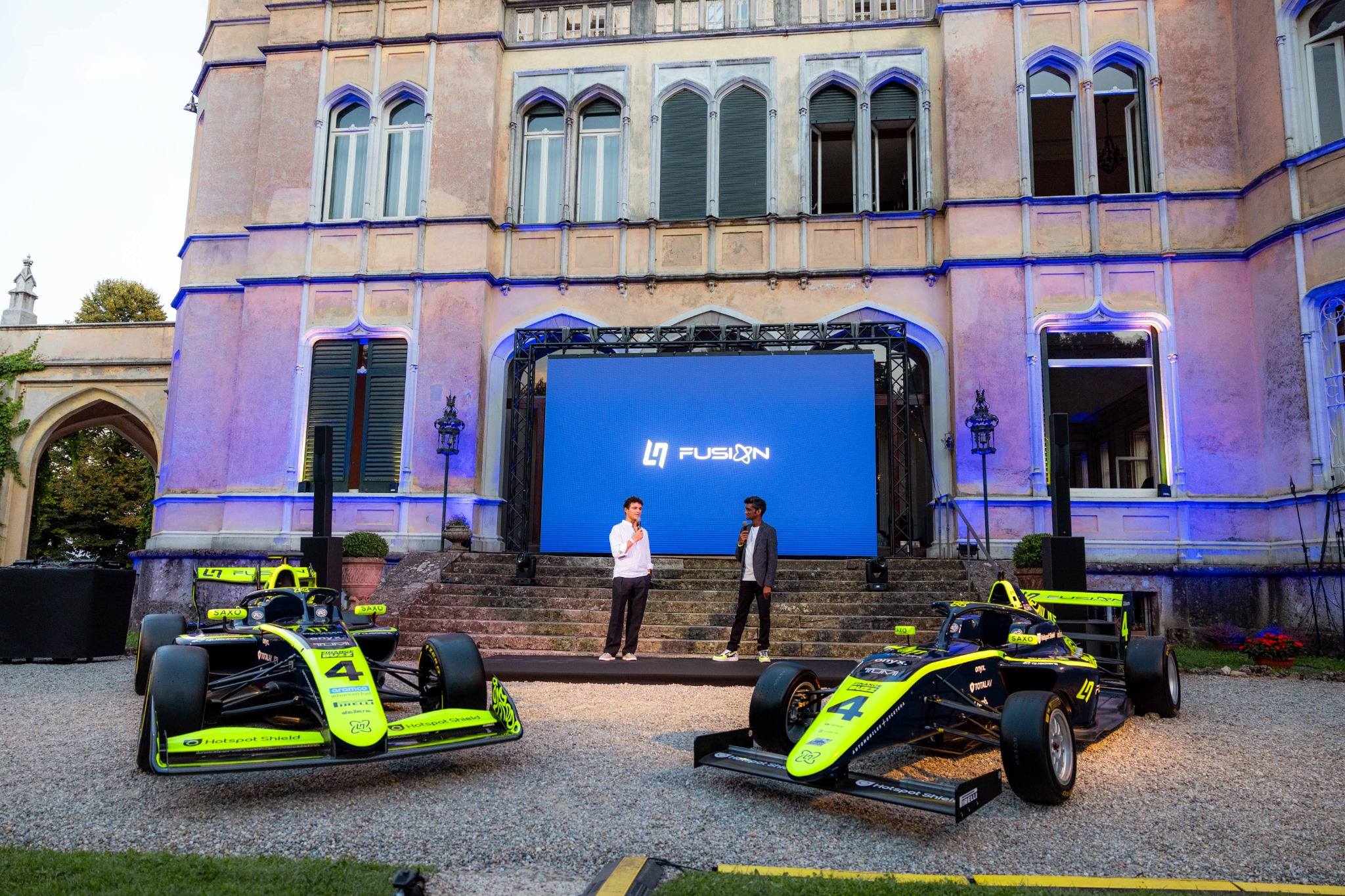
LN4 Fusion will compete across Italian F4, Formula Regional European Championship and FIA Formula 3 from 2027, with ambitions to expand further up the junior single-seater ladder.
Alongside it sits the LN4 Legacy Programme: an independently operated, fully funded initiative designed to support young drivers through funding, coaching, mentoring and career development.
Put together, the two initiatives represent something more interesting than a driver putting his name on a team.
They represent a driver beginning to build an ecosystem around his own IP.
And that could be an important development for the commercial side of motorsport.
From driver to IP owner
Traditionally, the commercial value of an F1 driver has been relatively straightforward.
- Performance creates profile.
- Profile attracts sponsors.
- Sponsors monetise that profile through branding, content, appearances and experiences.
The driver is therefore an important commercial asset within a wider property owned by the team, championship or event organiser.
That model isn't disappearing.
But the modern driver has something previous generations had far less control over: direct access to an audience.
Social media, content platforms and creator businesses allow drivers to build relationships with fans independently of their team or championship.
That creates a different opportunity.
Instead of simply monetising a personal brand through partnerships, a driver can use that brand to create owned IP.
Lando has already explored this through ventures such as Quadrant, spanning gaming, content and apparel.
LN4 takes the idea somewhere more interesting.
This time, the asset isn't adjacent to motorsport. It is motorsport.
Two initiatives. One ecosystem.
What makes LN4 particularly interesting is that Fusion and Legacy appear to serve different purposes.
LN4 Fusion creates competitive infrastructure.
The team will provide a platform for drivers to compete and develop through the junior categories, backed by experienced leadership from the world of junior single-seaters.
The LN4 Legacy Programme creates talent infrastructure.
Rather than simply selecting drivers who have already found a route through the system, it aims to identify and support young talent that might otherwise struggle to progress because of financial or developmental barriers.
That distinction matters.
Talent is essential in motorsport, but talent alone has never guaranteed progression.
Funding, coaching, management, opportunities, relationships and timing can all influence whether a talented driver continues up the ladder.
The two LN4 initiatives therefore complement each other:
One creates the platform. The other creates access to the platform.
That is more strategically interesting than either initiative in isolation.
Why should partners care?
This is where the model becomes particularly relevant commercially.
A traditional sponsorship proposition might offer a partner:
- branding on the car
- driver association
- hospitality
- content
- appearances
- media exposure
An ecosystem potentially creates something broader.
A partner could potentially engage with the team, drivers, content, development programme, events and community around the same overarching story.
That changes the conversation.
Instead of: “Where can we put your logo?”
the proposition becomes:“What can we build together?”
That distinction is increasingly important in sports partnerships.
Brands want visibility, but they also want stories they can activate. They want content, experiences, audience engagement and credible reasons for consumers to care.
Driver development provides a natural narrative around ambition, progression, performance and opportunity.
And because LN4 is connected to Lando's own journey, there is an authentic story already built into the proposition.
The commercial opportunity, therefore, isn't necessarily the individual sponsorship asset.
It's the ecosystem around it.
The bigger shift
LN4 also sits within a wider evolution in the role of elite athletes.
Drivers are increasingly becoming more than competitors.
- They are creators.
- Founders.
- Investors.
- Media personalities.
- And, potentially, owners of sporting IP.
The important change isn't that every F1 driver will start a racing team.
It is that the relationship between athlete, audience and commercial property is becoming less linear.
Previously:
Driver → Audience → Sponsor
Increasingly:
Driver → Audience → IP → Business / Team / Community → Commercial Partners
The driver can become the starting point for creating new properties rather than simply being the talent within an existing one.
For partnerships teams, that creates both opportunity and complexity.
The challenge becomes understanding how to integrate a brand into an ecosystem without reducing it to another logo placement.
The test for LN4
There is, however, an important question still to answer.
Can LN4 become valuable without Lando Norris being the reason everyone is paying attention?
That is the real test.
The founder's profile will undoubtedly create an enormous initial platform.
But long-term value will come from what the organisation builds beyond that attention: competitive success, strong drivers, credible development, compelling content, strong partnerships and an identity of its own.
If it achieves that, LN4 becomes more than an extension of Lando's personal brand.
It becomes a motorsport property in its own right.
And that is where the commercial potential becomes particularly interesting.
The real asset isn't the car
The headline is that Lando Norris has launched a junior racing team.
The more interesting development is that he is building something around his career that could outlast his career.
LN4 Fusion creates a competitive platform.
The Legacy Programme creates access to talent.
Together, they create the foundations of an ecosystem.
It is too early to know how successful that ecosystem will become.
But the strategic direction is clear.
The future commercial value of an F1 driver may not be measured only by how many people watch them race.
It may also be measured by what they are able to build around the race itself.
Post a comment